
Home›Deliverability & technical›Customer lifecycle
Customer lifecycle: reducing churn effectively
On this page
On this page
- The customer lifecycle: understanding the basics
- Identify critical moments in the customer journey
- Dissatisfied customers: an opportunity to seize
- Reduce churn: adopt winning strategies
- Loyalty: your best ally against churn
- A customer-oriented strategy: the key to success
- Continuous measurement and adjustment
- Conclusion: take action now
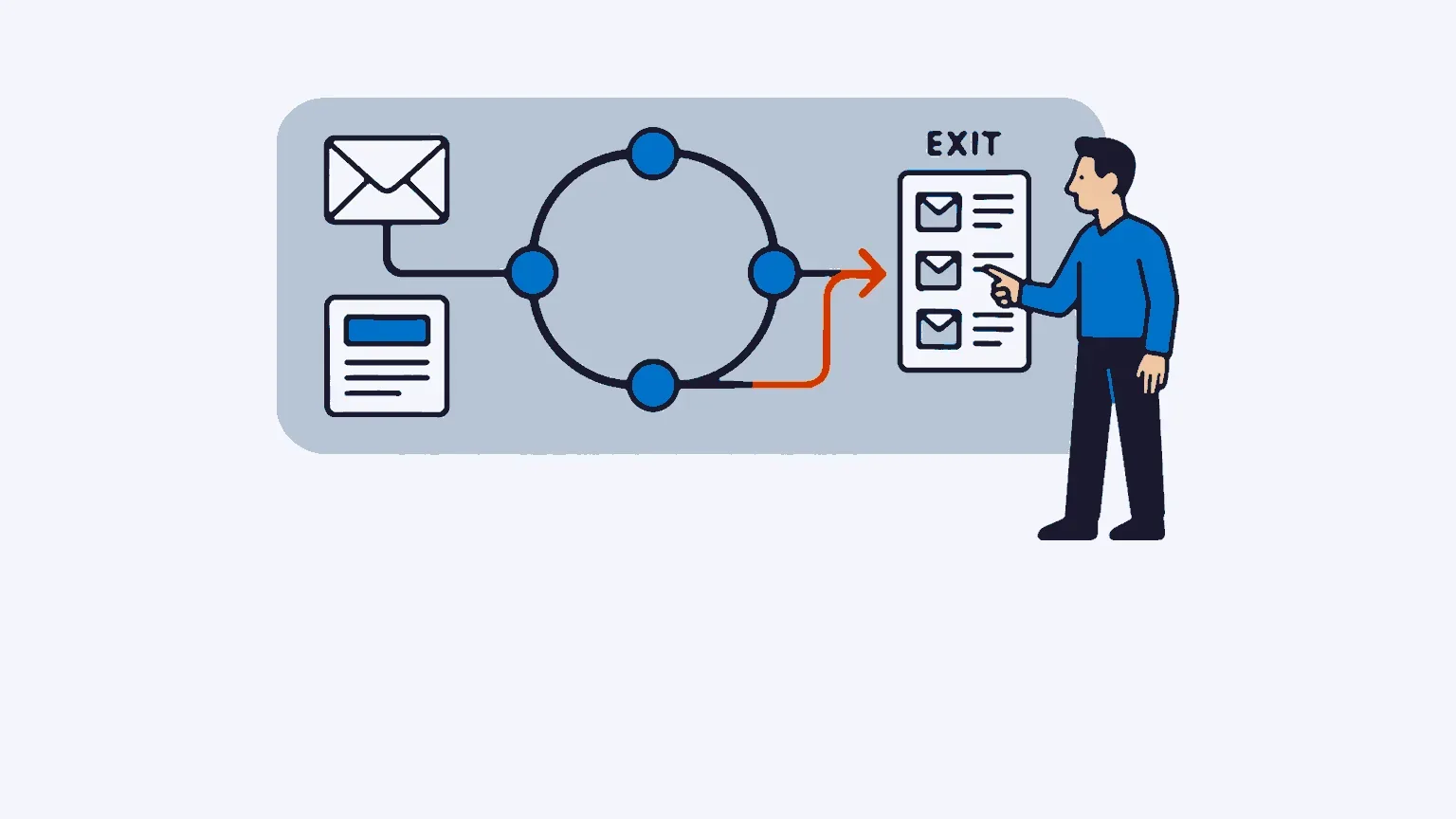
How can you turn your customers into loyal partners? 💡 Understanding the customer lifecycle and limiting churn is essential to any B-to-B marketing strategy. These two elements enable you to maximize the value of each relationship while reducing customer losses.
Let’s explore the different stages of the customer lifecycle, identify critical moments to present you with concrete strategies to build loyalty and limit attrition. 🚀 Get ready to discover tools and techniques to improve your results today.
The customer lifecycle: understanding the basics
Before you can act, you need to understand. The customer lifecycle is divided into several distinct phases:
- Acquisition: attract new prospects with targeted campaigns.
- Activation: quickly engage new customers to adopt your services.
- Retention: make sure they stay active and satisfied.
- Loyalty: strengthen their long-term commitment.
- Recommendation: convert them into ambassadors for your brand.
Why are these stages important? Each phase offers you a unique opportunity to interact with your customers. By mastering these moments, you build a lasting, profitable relationship.
Identify critical moments in the customer journey
Have you ever noticed that some customers pick up without warning? 🤔 These departures are not always unpredictable. Friction points in the customer journey are often at the root of the problem.
How to detect them?
- Analyze buying behavior: when do customers stop buying?
- Get direct feedback: use surveys to understand their frustrations.
- Map the customer journey: identify the stages at which they hesitate or give up.
A practical tool: the customer journey map. It allows you to visualize all interactions with your company and spot any loopholes.
Dissatisfied customers: an opportunity to seize
Dissatisfied customers are often perceived as a threat. But did you know that they can become your greatest allies? 💡 If you address their concerns, you can not only win back their trust, but also strengthen their loyalty.
How do you deal with an unhappy customer?
- Listen actively: show that their opinion counts.
- Of fer a personalized solution: a sales gesture, a phone call.
- ** Follow after resolution**: check that the problem has been solved.
A case in point: We set up an automatic email to collect feedback from dissatisfied customers. Result: 30% of them came back after a personalized response to their complaints.
Reduce churn: adopt winning strategies
What are the signs of imminent departure? 🚨 Prolonged inactivity, recurring support requests or declining interactions. These indicators are calls to action.
Strategies to limit churn:
- Automate follow-ups: a follow-up email or special offer can rekindle interest.
- Offer added value: share exclusive guides, case studies or webinars.
- Personalize your communications: address your customers’ specific needs directly.
CRM tools can help you centralize this data and automate your actions.
Loyalty: your best ally against churn
Did you know that a loyal customer costs 5 to 7 times less to keep than a new customer to acquire? 💸 What’s more, they often generate higher sales thanks to their repeat purchases.
How to build loyalty effectively?
- S et up tailored programs: exclusive discounts, privileged access to resources.
- Create a bond: send thank-you emails, celebrate their successes or anniversaries.
- Gamify the experience: use loyalty points or VIP levels.
Email marketing remains a powerful tool for maintaining relationships. By sending relevant, well-targeted messages, you build trust and engagement.
A customer-oriented strategy: the key to success
To succeed, your company needs to align its objectives with real customer needs. 🎯 This means:
- Collaborate across teams (sales, marketing, customer service).
- Leverage customer data to personalize every interaction.
- Automate repetitive tasks to devote more time to analysis.
Tip: use tools like HubSpot or Salesforce to centralize data and coordinate your actions.
Continuous measurement and adjustment
How do you know if your efforts are bearing fruit? By monitoring key performance indicators (KPIs).
- C hurn rate: how many customers do you lose each month?
- Lifetime Value (LTV): what is the total value generated by a customer?
- Net Promoter Score (NPS ): do your customers recommend you?
By regularly analyzing these metrics, you’ll identify areas for improvement. ✅ Adopt an iterative approach to testing, adjusting and optimizing your campaigns.
Conclusion: take action now
Customer lifecycle and churn are not just concepts, but powerful levers for your marketing strategy. 🚀 By understanding each stage, detecting moments of friction and building customer loyalty, you’ll lay the foundations for sustainable growth.
So, ready to transform your customer relationships? 🎯 Start today by applying these strategies and see the long-term results.
Related articles
B2B cold emailing: legal framework and best practices
In France, cold emailing a professional without prior consent is legal under three conditions: named business address, relevant message and easy opt-out.
9 min read B2B email marketingB2B email lead scoring: rank prospects by engagement signals
Lead scoring gives each prospect a score based on profile and behaviour. Your B2B email campaigns supply the most reliable signals: opens, clicks, replies.
8 min read B2B email marketingB2B marketing automation: 6 workflows that really convert
Six B2B marketing automation scenarios that produce qualified leads, from welcome series to buying-committee follow-up, with KPIs and mistakes to watch.
14 min read B2B email marketingB2B email prospecting: 15 techniques that really generate leads
Professionals are more solicited than ever, yet email remains their preferred channel. Fifteen B2B email prospecting techniques that really generate leads.
17 min read