
Home›B2B email marketing›Professional SMS routing
Professional SMS routing: how to choose a B2B solution
On this page
On this page
- SMS routing is the infrastructure that carries your messages to mobiles
- Direct routes, aggregators, grey routes: what lies behind the price per SMS
- What French regulation requires of your SMS router
- Consumer SMS is declining, business SMS is getting structured
- The criteria to review before signing
- Routing SMS and emailing from the same platform
- Frequently asked questions about SMS routing
In brief: SMS routing is the technical delivery of your messages to your recipients’ mobiles. Direct operator route, aggregator or grey route, this choice determines your deliverability, your regulatory compliance and the real cost of every message sent.
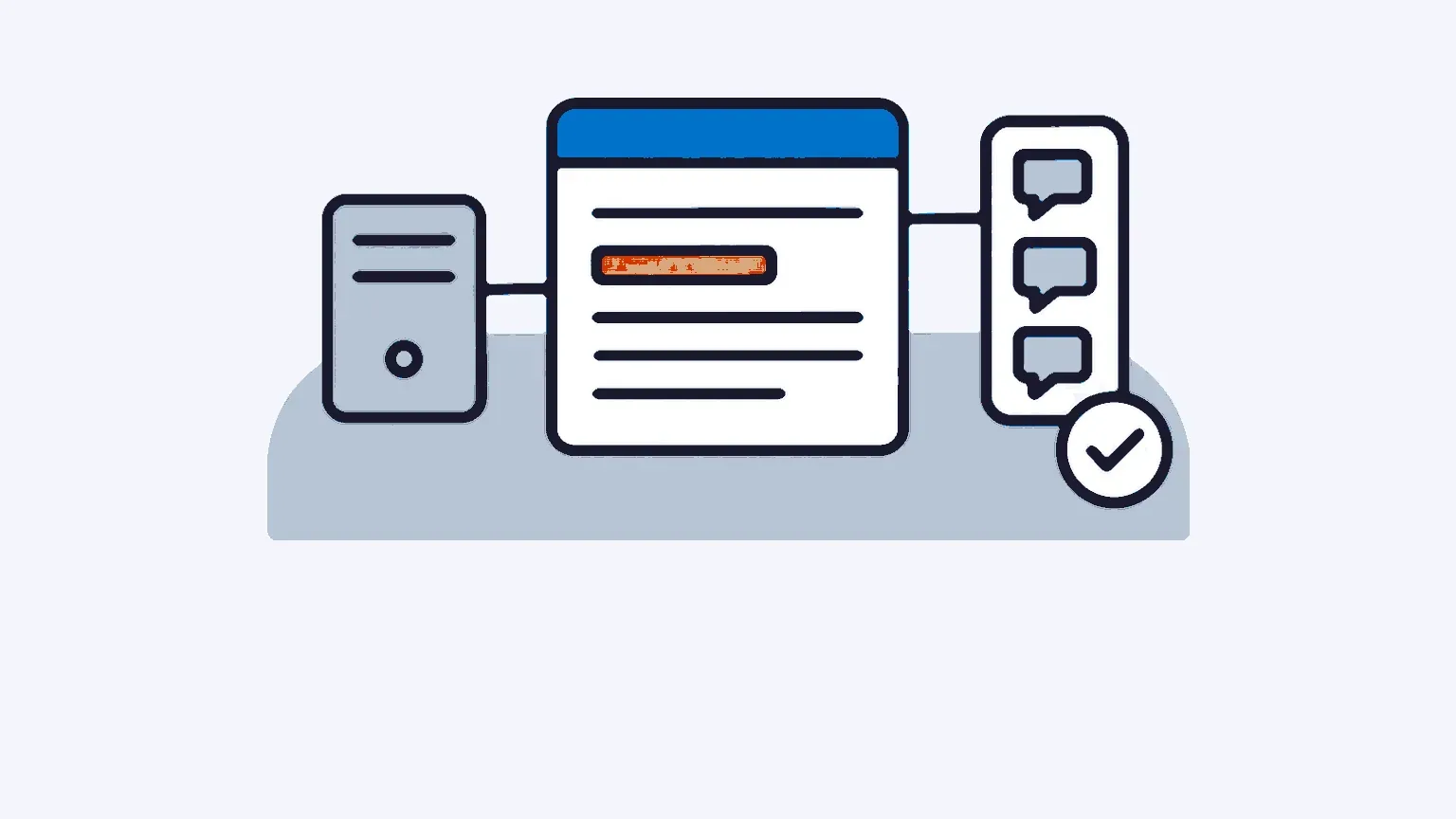
SMS routing is the infrastructure that carries your messages to mobiles
Anyone can send a text from their phone. Routing a hundred thousand messages to a database of business prospects in a few minutes, with a sender ID in your brand’s name and full traceability, is another trade altogether.
SMS routing is the technical chain that picks up your message from a web interface or an API, formats it, authenticates it, then injects it onto the mobile operators’ networks so that it reaches the recipient’s handset. Between your click on “send” and the vibration of the phone at the other end, there are SMPP gateways, interconnection agreements, queues and delivery receipts sent back operator by operator.
What you buy from a provider is therefore not really “SMS”. It is access to these routes. And the quality of that access varies enormously from one supplier to another. Two offers displayed at the same price can rest on infrastructures that have nothing in common, with very concrete consequences on the number of messages actually delivered.
Direct routes, aggregators, grey routes: what lies behind the price per SMS
This is the point that most sales pages in the sector keep quiet about. Yet everything hinges on it.
The direct operator route
The provider holds an interconnection agreement signed with each French mobile operator. The message leaves its platform and enters the destination network directly, without an intermediary. Delivery receipts come back from the operator itself, which gives reliable visibility on what was delivered and what was not.
It is the most expensive and the safest delivery mode. Service commitments cover verifiable elements: delivery time, delivery rate, sending capacity per minute.
The multi-operator aggregator
The aggregator pools interconnection agreements on behalf of several customers. It buys volume from the operators and resells it in tranches. Quality remains good provided the aggregator is serious and transparent about its own suppliers. It is the most widespread model in France, and for most B2B uses it does the job perfectly well.
The point of vigilance is simple: ask who is behind the route. An aggregator that refuses to say which operators or which partners carry your traffic is selling you a black box.
Grey routes
A grey route consists of injecting business traffic while passing it off as personal traffic, usually via diverted SIM cards or circumvented international agreements. It costs far less. It offers no contractual delivery guarantee, no usable traceability, and delivery can be cut off overnight by operators that filter this type of traffic.
In France, this arrangement is not only risky, it is regulated. As early as 2019, the af2m, the French association of multimedia mobile operators, restated the ban on sending marketing or transactional SMS to mobiles from ordinary 06 or 07 numbers via automated systems, in application of the numbering plan set by Arcep, the French telecoms regulator. An abnormally low price per message should therefore alert you: someone, somewhere in the chain, is saving on legality.
| Route type | Deliverability | Traceability | French compliance | Cost |
|---|---|---|---|---|
| Direct operator | High and contractual | Operator delivery receipts | Compliant | Highest |
| Aggregator | Good if the partner is transparent | Varies by supplier | Compliant if declared | Intermediate |
| Grey route | Unpredictable, possible cut-offs | Weak to non-existent | Non-compliant | Very low |
What French regulation requires of your SMS router
Business SMS is one of the most tightly regulated channels in French direct marketing. Choosing a provider also means choosing someone who knows these rules and applies them by default.
Sender IDs are no longer free-form
Two options coexist for the displayed sender. Numeric short codes first, with the 36xxx prefix reserved for promotional messages and the 38xxx prefix for transactional messages, such as authentication or appointment confirmation. Then the alphanumeric sender ID, limited to eleven characters, which displays your company name in place of a number.
The af2m Business Messaging Charter, which came into force on 1 March 2026, has tightened this framework. It covers all of Push SMS, A2P SMS and RCS for Business, and applies to every link in the chain: operators, aggregators, advertisers, providers. Misleading sender IDs or ones resembling a phone number are prohibited, promotional sends are confined to a time window, and prior opt-in is required for any promotional message. A router that let you send outside these rules exposes you, not itself.
This requirement for sender traceability is no accident. At the end of January 2026, Arcep opened an administrative inquiry into the operators after noting an explosion in reports of number spoofing, up from a few hundred in 2023 to nearly nineteen thousand since January 2025. The sector is getting tougher, and that is rather good news for advertisers who play by the rules.
B2B SMS prospecting: legitimate interest and the right to object
The regime differs depending on the target. Towards private individuals, the CNIL, the French data protection authority, requires prior consent that is free, specific, informed and unambiguous, materialised by a box that is not pre-ticked. Towards professionals, prospecting can rest on legitimate interest, on two conditions: that the subject of the message relates to the profession of the person approached, and that they have been informed of the use of their number with the option of objecting simply.
In all cases, each message must make it possible to identify the sender and to refuse future solicitations by a simple means, the STOP mention in practice. Unsubscribing must be immediate and effective. Recipients also have the 33700 platform, run by the af2m, to report unwanted SMS.
A word on current affairs, because the confusion is frequent. The law of 30 June 2025 moves telephone canvassing to a prior consent regime from 11 August 2026. That text targets voice calls. For SMS, the rules described above continue to apply, with the B2C and B2B distinction remaining the key to reading them. It is worth checking what your provider has understood of this framework before entrusting it with your database.
Consumer SMS is declining, business SMS is getting structured
One figure puts things in perspective. According to Arcep’s observatory of electronic communications markets, a French mobile customer sent on average 54 SMS per month in the first quarter of 2026, compared with 250 at its peak in 2016. The decline reached 27% over one year, after 22% the previous year.
This decline concerns exchanges between private individuals, largely absorbed by instant messaging apps. Application-to-person SMS, the kind a company sends to its customers or prospects, follows a different trajectory: it remains the only mobile channel that reaches any handset without an installed app, without a data connection, without an account to create.
This asymmetry has a practical consequence. A business SMS today lands in an inbox that is far less cluttered than ten years ago. Provided it is relevant, which presupposes a segmented database and a message that justifies the interruption. The same reflexes as for B2B SMS marketing in general: the channel is effective precisely because it is not used every day.
The criteria to review before signing
Market comparisons often stop at the price per message and the number of features. Here is the grid that really counts when buying routing.
| Criterion | What to ask | Warning sign |
|---|---|---|
| Nature of the routes | Direct or via aggregator, and which ones | Refusal to specify the delivery chain |
| Delivery receipts | Real-time operator feedback, detailed statuses | A mere “sent” with no delivery status |
| Sender ID | Management of short codes and alphanumeric IDs, compliance with the af2m charter | Promise of a free-form sender without validation |
| STOP handling | Automatic, centralised unsubscribing | Manual processing left to you |
| Sending capacity | Guaranteed throughput per minute, behaviour at peak | No quantified commitment |
| Data hosting | Server location, declared subcontractors | Vagueness on transfers outside the EU |
| Support | A reachable contact, in French, for incidents | Ticket only, with no escalation |
| Commitment | Duration, exit conditions, fate of unused credits | Credits that expire on a fixed date |
This last point deserves a simple test. Ask what happens to your credits if you send nothing for a quarter. The answer says a lot about the commercial relationship that awaits you.
Also test quality before committing to volume. A real send to a sample of a hundred known numbers, spread across the various French operators, will give you in a few minutes a more honest picture than any brochure. Compare what the platform reports as delivered with what the recipients actually received.
Routing SMS and emailing from the same platform
Most SMS routing providers only do SMS. That becomes a problem as soon as your scenario goes beyond the single message, which happens quickly in B2B prospecting.
A common example: an introduction email goes out on Tuesday, a follow-up SMS follows on Thursday to those who opened without replying, and non-openers receive a second version of the email the following week. With two separate tools, you have to export the open statuses, re-import them into the SMS platform, manage two unsubscribe lists and hope nobody receives an SMS after asking not to be contacted any more. With a single database, segmentation is done in one query and unsubscribes propagate on their own.
That is the logic adopted by the Ediware SMS platform, backed by the same dashboard and the same contact database as the emailing, with credits that never expire and no fixed-term commitment. For putting scenarios into practice, the article on how to combine email and SMS details the follow-up sequences that work in B2B.
Frequently asked questions about SMS routing
What exactly is SMS routing?
SMS routing is the technical delivery of a message from a sending platform to the recipient’s phone, via the mobile operators’ networks. It covers formatting the message, authenticating the sender, injecting it onto the network and returning delivery receipts.
What is the difference between a direct route and an aggregator?
The direct route rests on an interconnection agreement signed between the provider and each mobile operator. The aggregator pools these agreements for several customers and resells the volume in tranches. The direct route costs more and offers the most solid guarantees; the aggregator suits the majority of B2B uses.
What is a grey route and why avoid it?
A grey route passes business traffic off as personal traffic, usually via diverted SIM cards. It is cheap but offers neither a delivery guarantee nor traceability, and sending marketing SMS from ordinary mobile numbers via automated systems has been banned in France since 2019.
Can you prospect by SMS in B2B without consent?
Yes, under conditions. The CNIL accepts legitimate interest in business prospecting if the subject of the message relates to the profession of the person approached, if they have been informed of the use of their number and if they can easily object to any further solicitation.
What does the af2m Business Messaging Charter change?
In force since 1 March 2026, it regulates Push SMS, A2P SMS and RCS for Business for every player in the chain. It limits the alphanumeric sender ID to eleven characters, bans misleading senders, imposes opt-in for promotional messages and sets sending time windows.
How do you check the quality of a routing solution before committing?
Do a test send to a hundred known numbers, spread across the French operators, and compare the statuses reported by the platform with actual receptions. In parallel, ask about the nature of the routes used, the guaranteed throughput and the contract exit conditions.
Related articles
Email and LinkedIn: the winning combination for B2B prospecting
How to combine email and LinkedIn in B2B prospecting: which channel to open with, what sequence to run, how to enrich your data safely and measure it all.
10 min read B2B email marketingB2B SMS vs. B2C SMS: specificities and opportunities
B2B SMS is not spam in disguise: well targeted, it reaches the right person at the right time. Specificities, legal framework and opportunities versus B2C SMS.
6 min read Email marketing tipsHow can you combine email and SMS to effectively relaunch your prospects?
Emails drowned in the mass, inert prospects: how to combine email and SMS in a follow-up sequence that actually gets a reply.
7 min read B2B email marketingEmail open geolocation: putting the data to work
Geolocating email opens in B2B: what the data is worth, why Apple, Gmail and security filters skew it, and how to use it without being misled.
8 min read